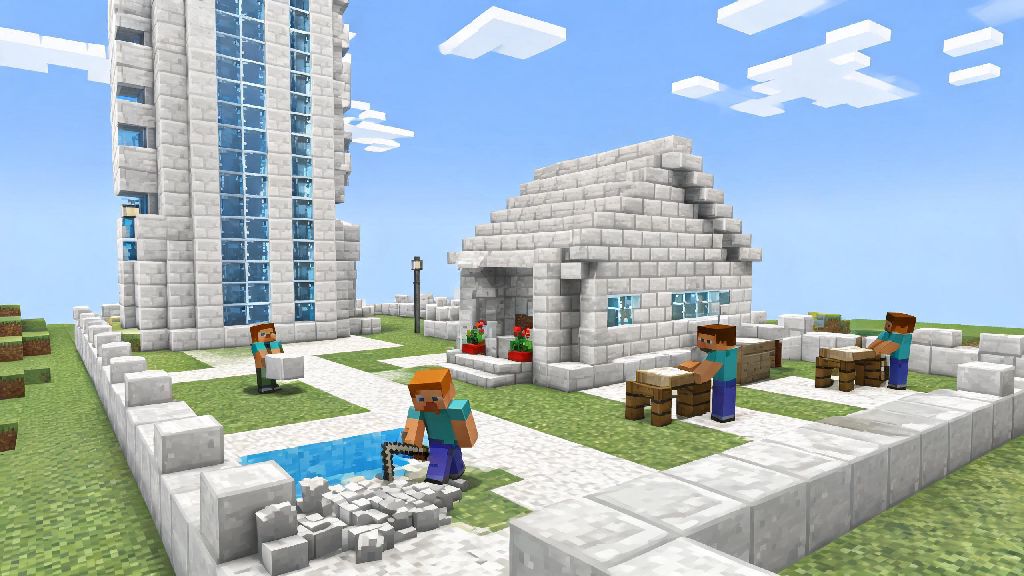
If you’ve ever spent hours scrolling through Minecraft build inspiration and wondered how creators get those crisp, bright walls and smooth pathways, the answer is almost always concrete. This versatile block is far less grainy than terracotta, way more durable than wool, and comes in every shade you could want for everything from modern skyscrapers to cozy cottage accents. If you’re asking how do you make Minecraft concrete, the process is simpler than you might think, even if you’re playing on a survival world with limited resources. I’ve been using this block for years for my own server builds, and I’ve picked up plenty of shortcuts and hacks to skip the most frustrating mistakes new players make.
What Materials You Need to Make Minecraft Concrete (And Where to Find Them)
Concrete has two core components: concrete powder, and a water source to harden it. You can’t craft solid concrete directly in a crafting table, so you’ll need to make powder first before you can get the finished block. To make 8 units of concrete powder, you only need three simple materials: 4 sand blocks, 4 gravel blocks, and 1 dye of your chosen color.
Sand is one of the easiest resources to find in almost any Minecraft world. You’ll find large deposits on beaches, desert biomes, and shallow riverbeds, and you can mine it twice as fast with a basic wooden or stone shovel. Gravel spawns in similar locations, plus underground in caves and mountain biomes, so you’ll probably have stacks of it lying around from mining for diamonds or iron. You don’t need any enchanted tools to gather either material, so you can start stocking up within your first hour of a new survival playthrough.
Dyes are what give concrete its 16 unique, vibrant shades, and you can source them from all sorts of in-game items. Common dyes come from flowers: sunflowers give yellow, poppies give red, and cornflowers give blue, for example. Rarer dyes come from mob drops or rare materials, like ink sacs from squid for black dye, or glow ink sacs for the bright glow ink variant. You can’t turn existing concrete blocks back into powder, so pick your dye color carefully before you start crafting piles of powder.
Step-by-Step: How Do You Make Minecraft Concrete in Survival Mode
The crafting process only takes a few steps once you have all your materials gathered, and it works exactly the same on both Java and Bedrock editions of the game. First, open your 3x3 crafting table menu. The concrete powder recipe is shapeless, so you can place the 4 sand blocks, 4 gravel blocks, and 1 dye anywhere in the grid to get 8 units of powder. If you want to make 64 powder blocks at a time, just fill the grid with proportional amounts of the three materials, and you’ll get full stacks in one go.
Once you have your powder, the next step is to harden it into solid concrete. All you need to do is place the powder block directly next to a water source, or drop it into flowing or standing water. The powder will instantly harden into solid concrete the second it touches water, even if it’s just a single block of standing water or a flowing stream. You don’t need any extra tools or items to trigger the reaction, it happens automatically.
That said, there’s a common mistake most new players make here. They assume concrete can be crafted directly in the crafting table, and get frustrated when they can’t find the recipe. The water hardening step is non-negotiable, so you’ll never find solid concrete in your regular crafting menu. I usually set up a small crafting station right next to an infinite water source on my survival base, so I don’t have to carry buckets of water back and forth when I’m making 100+ blocks for a big build.
Tips for Making and Using Minecraft Concrete Efficiently
If you’re still getting the hang of how do you make Minecraft concrete, these small hacks will save you hours of frustrating mistakes and wasted resources as you work on your builds. I use all of these tricks regularly when I’m building large community spaces on my public server, and they cut my crafting time almost in half.
Another handy trick is to drop concrete powder from a height directly into a body of water. The powder will fall as a block entity, and harden the second it hits the water, so you can make large stacks of concrete without placing each powder block individually. This works especially well if you’re making concrete for a bridge or waterfront build, since you can use the existing water source to harden all your blocks on site.
Concrete has a blast resistance of 9, which is higher than cobblestone, so it can withstand most small explosions without breaking. That makes it a perfect choice for survival bases in areas with lots of creepers, or for builds near nether portals where ghast fireballs might stray into the overworld. It also doesn’t burn, so you can use it for fireplace surrounds or furnace rooms without worrying about fire spreading to the rest of your build.
Common Minecraft Concrete Mistakes to Avoid
Even if you know the basic crafting process, it’s easy to make small mistakes that waste your time and resources. The most common mistake I see new players make is buying or farming way more dye than they actually need for a project. A single dye makes 8 concrete blocks, so you only need 8 dye to make a full stack of 64 concrete blocks, not a full stack of dye. I’ve had friends waste entire fields of flowers before realizing how far a single dye item goes.
Another frequent error is trying to recolor existing concrete blocks. You can’t recolor concrete after it’s been hardened, so you have to make new powder with the right dye if you want a different shade. This is why testing palettes in creative first is so important, you don’t want to spend 2 hours making 200 light blue concrete blocks just to realize you wanted cyan instead.
Many players also don’t realize that concrete works perfectly underwater with no extra steps. If you’re building an underwater base or updating an ocean monument, you can place concrete powder directly underwater and it will harden instantly, no air pockets or special tools required. It’s far more durable than prismarine and comes in more colors, so it’s become my go-to block for all underwater builds.
If you’re playing on a multiplayer server, don’t leave stacks of concrete powder lying around unprotected. Other players can easily pick it up, or even accidentally trigger it to harden if they place water nearby, ruining your entire stock of pre-made powder. I always keep my powder in locked chests on public servers to avoid that exact issue.
At the end of the day, concrete is one of the most useful building blocks you can add to your Minecraft toolkit, and the crafting process is straightforward once you get the hang of making powder and hardening it with water. Next time you’re planning a new build, don’t sleep on this versatile, durable block to add crisp, clean color to every part of your world. Now that you know how do you make Minecraft concrete, you can start experimenting with all 16 color variants to bring even your wildest build ideas to life.