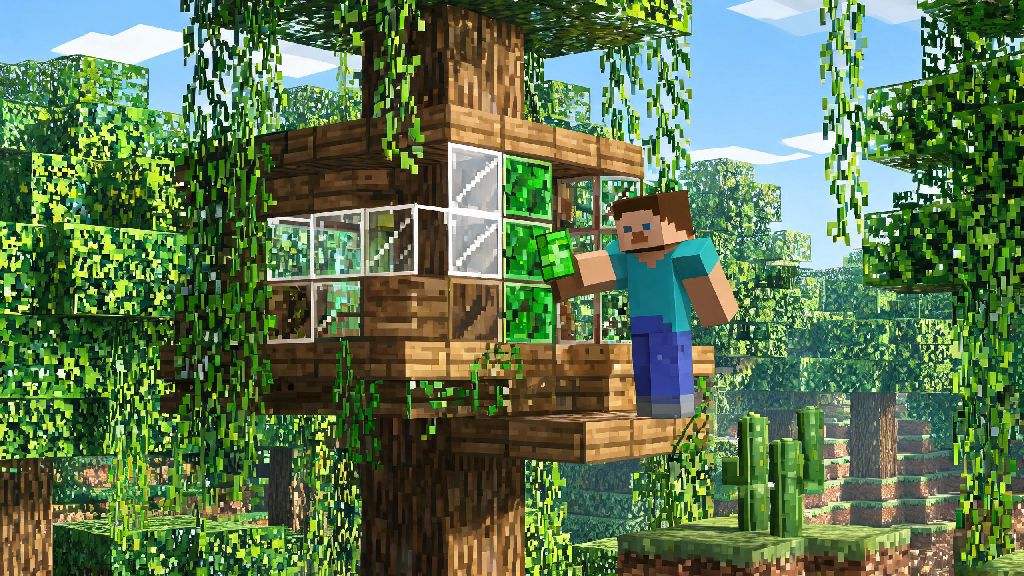
You're halfway through building your custom jungle treehouse, or decorating your villager trading hall with natural accents, and you realize you don't have any green dye to finish your stained glass or terracotta details. If you're stuck figuring out how to get green dye in Minecraft, you're not alone -- it's one of the few dyes that doesn't come directly from a flower, so new players often miss the simple method to farm it reliably. I've been playing Minecraft for over 8 years, and I've tested every method to get this color, from early-game survival tricks to mass production farms, so I'll walk you through every option that works for both Java and Bedrock editions.
How to Get Green Dye in Minecraft: Core Survival Method
If you've ever spent 10 minutes clicking through the crafting menu trying to combine random plants to make green dye, you're not wasting your time -- it literally can't be made that way. Cactus blocks are the only base ingredient for regular green dye in vanilla Minecraft, no matter which edition you play on. You can find cactus growing naturally in any desert biome, as well as dry badlands areas, and wandering traders will occasionally sell individual cactus blocks for 1 emerald each if you can't find a desert near your spawn.
Once you have your cactus, all you need is a furnace and any type of fuel. One cactus block smelts into exactly one green dye, so if you need 32 dye for a stack of green concrete, you'll know to grab 32 cactus blocks before you start smelting. You can use any fuel you have on hand, but dried kelp blocks or lava buckets are the most efficient for large batches, since they last far longer than planks or coal. If you're in a real pinch, wandering traders do sometimes sell 3 green dye directly for 1 emerald, but that's an extremely costly trade, especially if you need more than a few pieces.
One common mistake to avoid: don't try to break cactus with your hand if you don't have to. Cactus deals half a heart of damage every time you touch it, so use a tool or knock it off its sand block with a stray block placement to collect it safely. You can also plant the cactus you collect to grow more, which leads directly to the easiest way to get unlimited green dye long term.
How to Build a Basic Green Dye Farm for Unlimited Stock
Once you have at least 3 cactus blocks, you can build a fully automatic green dye farm in less than 15 minutes, no redstone required. This farm will produce as much dye as you need without any extra work after you set it up, making it perfect for both small survival bases and large creative building projects. Before you start building, gather these materials:
The farm works on a simple principle: cactus grows up to 3 blocks tall, so if you place a solid block one space above the third cactus layer, the cactus will break automatically when it grows into that block. Hoppers placed below the farm platform collect the broken cactus and feed it directly into connected furnaces, which smelt the cactus into green dye and send the finished product to a connected double chest. You don't need any redstone for a basic automatic green dye farm, which makes it perfect for early game survival when you don't have access to pistons or observers yet.
A 4-row farm of this design will produce enough dye for even large building projects in under an hour of AFK time. I use this exact farm on all my survival worlds, and I usually end up with multiple chests of surplus green dye after just a few hours of play, which I can trade for emeralds or use for other dye combinations later.
Alternative Methods to Get Green Dye for Different Play Styles
The cactus smelting method works for all vanilla playthroughs, but there are other ways to get green dye depending on what mode or type of world you're playing on. If you're in creative mode, you can find green dye directly in the miscellaneous items tab, or use the give command if you have cheats enabled, no smelting required. You don't need to gather any materials to get it, so you can focus entirely on your building project without pausing to farm resources.
If you're playing a modded Minecraft pack, some mods add alternative sources for green dye, like crushed green leaves from certain tech mods, or dye from specific forest plant types. Always check your mod pack's recipe viewer (like JEI or REI) to confirm available methods, as some packs change vanilla crafting rules to make dye easier or harder to get. For players on multiplayer servers, many community shops sell green dye for in-game currency, which is a good shortcut if you don't want to spend time building a farm for a small project.
If you're playing a legacy version of Minecraft (before 1.14), you might see green dye referred to as cactus green, the name was updated to match the rest of the dye naming convention in the Village & Pillage update. The crafting method hasn't changed though, so you'll still smelt cactus to get it no matter which version you play on. Don't confuse regular green dye with lime green dye, which is made by combining green dye with white dye -- they're two separate colors with different use cases.
Practical Uses for Green Dye to Make the Most of Your Stock
Green dye is one of the most versatile dye colors in the game, especially for nature-themed or tropical builds. The most common use is to color building materials: you can dye wool, terracotta, concrete powder, stained glass, candles, and even signs to add natural green accents to your builds. It's perfect for jungle bases, beach huts, forest paths, and even modern homes that use natural color palettes.
You can also use green dye to customize a wide range of in-game items. Dye leather armor, beds, shulker boxes, banners, and firework stars to match your base's theme or add personal touches to your gear. If you have a surplus of green dye from your farm, you can trade it to apprentice-level shepherd villagers for emeralds -- they'll buy 12 green dye for 1 emerald, which is a great way to generate extra emeralds early in the game without mining or exploring for rare resources.
Green glazed terracotta has a unique palm tree pattern when placed correctly, which makes it perfect for decorating beach builds or jungle treehouse floors. Green dye is also a key ingredient for making other popular dye colors: mix it with blue dye to make cyan dye, or mix it with white dye to make lime green dye, so a single green dye farm can cover three different color needs for your builds. I usually keep a dedicated chest of green, cyan, and lime dye on all my survival worlds, since I use them so often for natural build accents.
At the end of the day, getting green dye in Minecraft is way simpler than many new players think, as long as you remember that it comes from smelted cactus instead of flowers. Whether you're building a small survival base or a massive creative map, having a steady supply of this versatile color will open up tons of new design options for your world. The small amount of time you spend setting up a basic farm will pay off every time you need to grab a stack of dye for your next project.