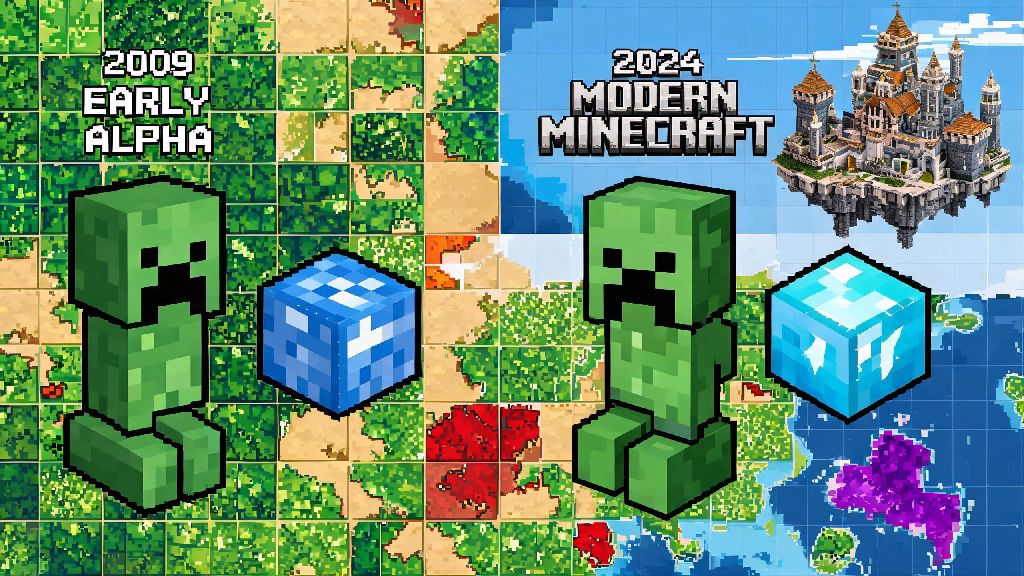
If you’ve ever spent hours digging for diamond, building a floating castle, or fending off creepers at dusk, you’ve probably wondered at some point when was Minecraft released. It’s hard to believe the blocky sandbox that took over gaming started as a tiny side project by a single developer, rather than a big-budget studio production. Today, it’s sold more than 300 million copies worldwide, with hundreds of millions of monthly active players across every major gaming platform. We’re breaking down its full launch timeline, plus all the little-known details casual fans often miss about its early days.
When Was Minecraft Released Officially? Breaking Down the Full Timeline
Minecraft’s launch wasn’t a single one-day event like most AAA games you see today. The project started as a passion project for Swedish developer Markus “Notch” Persson, who drew inspiration from earlier sandbox games like Dwarf Fortress and Infiniminer. He spent just six days coding the first playable prototype before sharing it publicly on a gaming forum.
The first public build of Minecraft launched for free on May 17, 2009, but this early version was extremely limited. It only had creative mode, 32 different block types, no mobs, no crafting, and no progression system. It was essentially a digital building block set, and only a small group of indie game fans knew it existed at first.
Over the next two and a half years, Notch released regular updates, added new features, and sold early access copies to fund development. The game went through Indev, Infdev, Alpha, and Beta phases, with each update adding core mechanics like survival mode, mobs, redstone, and multiplayer. Unlike most modern games, Minecraft’s "release" was a gradual process that invited players to shape its development before the official 1.0 drop. The full official launch finally happened on November 18, 2011, during the first ever MineCon fan event in Las Vegas.
Key Differences Between Minecraft’s Early Builds and Modern Editions
If you’ve only ever played the latest version of Minecraft, going back to early builds can feel like playing a completely different game. The 2009 pre-classic build didn’t even have a save function, so any builds you made would disappear as soon as you closed the game. As the game moved through its early access phases, Notch and the growing Mojang team added features based directly on player suggestions from forums and early feedback.
Some of the most iconic Minecraft features didn’t arrive until just a few months before the official 1.0 launch. The Ender Dragon, End dimension, and enchantment system were all added in the final Beta updates, for example. We’ve broken down the most notable feature additions by development phase below:
In 2017, Mojang released the Bedrock Edition, which unified the game across mobile, console, and Windows 10 platforms. If you play on mobile, Xbox, PlayStation, or Nintendo Switch, you’re running the Bedrock Edition, which shares cross-play functionality across all those platforms. The original PC version, now called Java Edition, is still supported and receives the same content updates as Bedrock, though the two editions are not compatible with each other.
One of the best perks of being a Java Edition player is access to legacy builds. You can still access all old legacy builds of Java Edition directly through the official Minecraft launcher, no third-party downloads required. Many long-time players boot up Beta or Alpha builds when they want a simpler, more nostalgic gameplay experience without the dozens of new biomes, mobs, and mechanics added over the last decade.
Why Knowing Minecraft’s Release Timeline Matters for Players
You might be wondering why you’d need to know the exact release dates for different Minecraft versions, especially if you only play casual vanilla survival. For modded players and server owners though, this information is critical to avoid frustration and broken game installs.
Nearly all Minecraft mods are built for specific game versions, and most mod developers don’t go back to update old mods for new releases. If you want to play a popular classic mod pack like Tekkit or Hexxit, you’ll need to download the exact version of Minecraft the pack was built for, which requires knowing when that version launched. Installing mods on the wrong game version will almost always lead to crashes, missing content, or corrupted save files.
The 1.12.2 build, released in September 2017, remains the most popular version for modded servers and custom mod packs. It has the largest library of stable, fully developed mods, and many mod developers stopped updating their work past this version because later updates changed core game code that would require full rewrites. I’ve run half a dozen small modded servers for friends over the years, and I always test the full mod pack on the exact release version first to avoid wasting hours troubleshooting conflicts.
Even vanilla players can benefit from knowing the release timeline. If you’re watching an old building tutorial or survival guide, knowing what version the creator was using will help you adjust for mechanics that have changed. For example, the way you repair tools with an anvil changed completely in the 1.14 update, so a tutorial made for 1.12 won’t work the same way on the latest release.
Common Misconceptions About Minecraft’s Launch Date
Because Minecraft’s launch was so gradual, there are a lot of persistent myths floating around about when it actually came out and who developed it. One of the most common ones is that Minecraft officially launched in 2009. While the first public test build did come out that year, the full official release with all core survival mechanics didn’t arrive until 2011. The 2009 build is more of a prototype than a full game.
Another common myth is that Microsoft created Minecraft. Microsoft did not develop the original version of Minecraft, but they have led all major content updates for the game since 2014, when they purchased Mojang for $2.5 billion. All versions of the game released before 2014 were developed solely by Mojang, with no input from Microsoft.
A lot of players also assume Bedrock Edition is a fairly new release, but it’s actually built on the Minecraft Pocket Edition code that first launched for mobile devices in 2011. Mojang just rebranded it to Bedrock in 2017 when they unified the codebase across all non-Java platforms. There are also players who swear the game used to cost $5 when it first came out, but that’s not true. Early access copies for Alpha cost €10 (around $15 at the time), the price went up to €20 for Beta, and it cost €26.95 at official launch. There was never an official $5 price point for the full game.
Whether you’re a new player just downloading the game for the first time, or a long-time fan who’s been playing since the Beta days, understanding when was Minecraft released gives you a better appreciation for how far the game has come. You can use that timeline to pick the right version for mod packs, join legacy servers, or just impress your friends with random Minecraft trivia at your next game night. The game’s gradual, community-focused development process is part of why it’s remained relevant for more than 15 years, and there’s no sign it’s going anywhere anytime soon.