There’s nothing more frustrating than herding a group of sheep across 300 blocks of ocean and forest just to lose half of them to a random creeper explosion or a stray wolf pack. If you’ve ever struggled to keep mobs where you want them, you’ve probably wondered how to craft lead in Minecraft, the game’s go-to tool for leashing and moving almost any passive mob safely. I’ve spent hundreds of hours in survival worlds testing every trick for transporting livestock, llamas, and even stray cats, and this guide breaks down everything you need to know to make, use, and find leads without wasting rare resources.
How to Craft Lead in Minecraft: Exact Recipe and Required Materials
Once you have all the required materials, figuring out how to craft lead in Minecraft only takes a few seconds at a standard crafting table. You’ll need 4 pieces of string and 1 slimeball to craft 2 leads per recipe run, so you don’t have to grind for materials every time you need a couple of extra leashes for a trip. String is pretty easy to come by for most players: you can get it from killing spiders, breaking cobwebs in abandoned mineshafts, looting desert or jungle temple chests, or even trading 20 pieces of wool with a novice shepherd villager for 3 string.
Slimeballs are the main bottleneck for most new players, since they don’t spawn as commonly as string. The easiest way to get slimeballs early game is to visit a swamp biome at night, when slimes spawn on the surface between Y-levels 50 and 70. You can also find slimes in slime chunks, specific underground blocks where slimes spawn at any light level below Y=40. If you don’t feel like hunting for slimes, you can get slimeballs as a rare drop from baby pandas when they sneeze, or as a common drop from killing slimes that spawn near wandering traders.
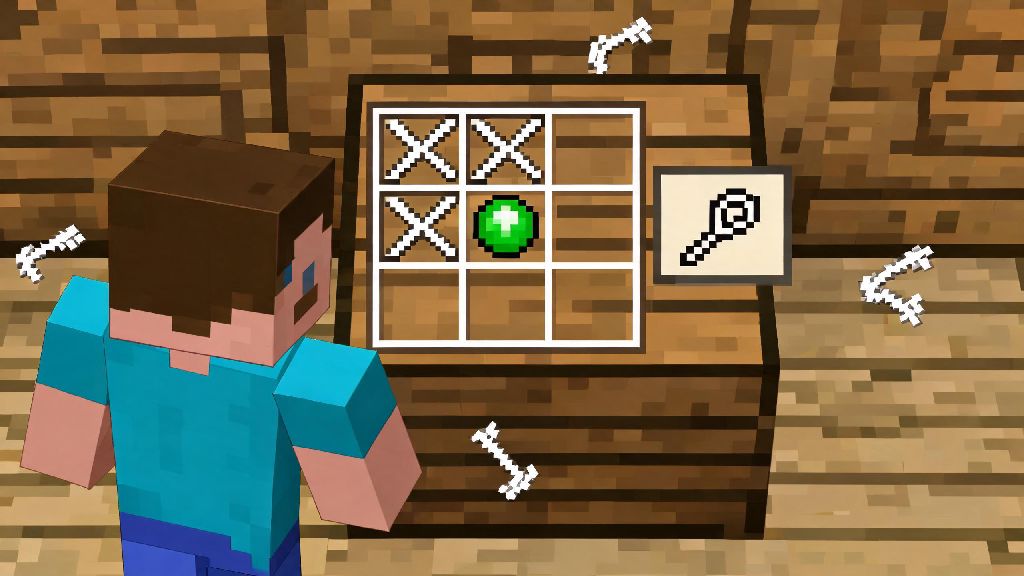
To craft the lead, open your 3x3 crafting grid and place string in the top-left, top-middle, and middle-left slots. Put the slimeball in the center slot, and the final piece of string in the bottom-right slot. You’ll see 2 leads pop up in the result slot, which you can move straight to your inventory. You don’t need any special tools or crafting stations for this recipe, so you can make leads on the go if you have the materials with you.
Best Use Cases for Leads in Your Survival World
Leads aren’t just for moving sheep to your farm. I use them for dozens of small tasks that cut down on wasted time in my survival worlds, especially when I’m building out large bases or exploring new biomes. Some of the most useful ways to deploy leads include:
You can’t leash hostile mobs (except for hoglins in the Nether, weirdly enough) or boss mobs, so don’t waste your leads trying to tie a creeper to your front porch as a prank. It won’t work, and you’ll probably lose a life in the process. Another little-known quirk: if you tie a lead to a boat or a minecart, you can drag the vehicle across land faster than you can push it, which is great for moving boats from one lake to another without building a water channel.
I also use leads when I’m building large, multi-level bases to mark out where I want to place specific structures. Tying a lead to a fence post and extending it to the edge of where I want a wall to go gives me a straight visual guide that’s easier to follow than counting blocks as I go. It’s a silly little trick, but it saves me a ton of time fixing misaligned walls later.
Common Mistakes to Avoid When Using Leads
Even though leads are pretty straightforward to use, I’ve made enough mistakes with them over the years to know there are a few pitfalls new players always fall into. First, tying leads to non-fence blocks: if you tie a lead to a regular dirt, stone, or wood block, any mob can yank it loose if they walk far enough away. Always tie leads to fence posts, wall posts, or fence gates if you want them to stay secured long-term. These blocks have a special hitbox that keeps leads attached even if the mob pulls hard or runs away for a short distance.
Another common mistake is forgetting to pack leads when you travel. I can’t tell you how many times I found a rare herd of mooshrooms on a distant island only to realize I left all my leads at home, so I had to make a 20-minute round trip to grab them. Keep at least 4 leads in your ender chest or travel hotbar at all times, so you’re never stuck leaving a rare mob behind. If you’re flying with elytra, keep extra leads in your inventory, since it’s easy to get moving too fast and snap leads on leashed mobs below you.
Leads snap if the mob is more than 10 blocks away from you, especially if you’re moving fast on a horse or flying with elytra. If you’re transporting multiple mobs at once, move slowly, and don’t jump off cliffs or cross large gaps without checking that all your leashed mobs are close behind. If a lead snaps, it will drop as an item on the ground, so you can pick it back up if you act fast before it despawns after 5 minutes. Don’t panic if a lead breaks mid-trip; you usually have plenty of time to grab it and reattach it to your mob before it wanders off.
Last, don’t waste leads on mobs you can easily lure with food. If you’re moving cows or chickens 50 blocks from one pen to another, using wheat or seeds is way more efficient than using up leads, so save your slimeballs for mobs that don’t have a lure food item, like llamas or axolotls. You’ll go through slimeballs a lot slower if you only use leads when you actually need them.
How to Get Leads Without Crafting Them
Sometimes you need leads fast and don’t have time to hunt for slimes, and that’s totally fine. There are three reliable ways to get leads without crafting them, and all of them are accessible even for new players who haven’t found a swamp biome yet. First, wandering traders: every wandering trader spawns with 2 leads attached to their llamas, so you can get leads by killing the trader or the llamas. You can also kill the llamas directly for leads, but you’ll lose access to the trader’s rare items, like coral blocks, enchanted books, or unique saplings. I only kill wandering traders for leads if they don’t have any items I want, otherwise I just buy what I need from them and let them leave peacefully.
Second, you can find leads in loot chests across almost every generated structure in the game. Leads spawn in woodland mansion chests, desert temple chests, dungeon chests, ancient city chests, and even buried treasure chests on beaches. I’ve found up to 3 leads in a single woodland mansion chest before, so if you’re exploring those structures anyway, keep an eye out for them. They’re usually pretty common loot, so you’ll probably stumble on a few without even trying if you explore regularly.
Third, you can trade for leads with master-level shepherd villagers. Once you level up a shepherd to master rank, they will sometimes sell 2 leads for 1 emerald, which is an insanely good deal if you have a surplus of emeralds from farming wheat or wool. The only catch is you have to level up the shepherd first by trading them wool, wheat, or shears, so if you have a villager trading hall set up, this is the most reliable way to get unlimited leads without hunting for slimes at all. I actually use this method exclusively in my late-game survival worlds, because I have a whole floor of shepherd villagers that trade leads for pennies, so I never have to go slime hunting anymore.
At the end of the day, learning how to craft lead in Minecraft is one of the simplest quality-of-life upgrades you can make for your survival playthrough, whether you’re building a massive zoo, setting up a multi-biome farm, or just trying to keep your pet fox from running off into the woods. Don’t stress if you can’t find slimeballs right away; the alternative methods for getting leads are just as reliable, especially once you have a steady villager trading system set up. Next time you head out to explore a new biome, toss a couple of leads in your bag, and you’ll never have to leave a rare mob behind again.