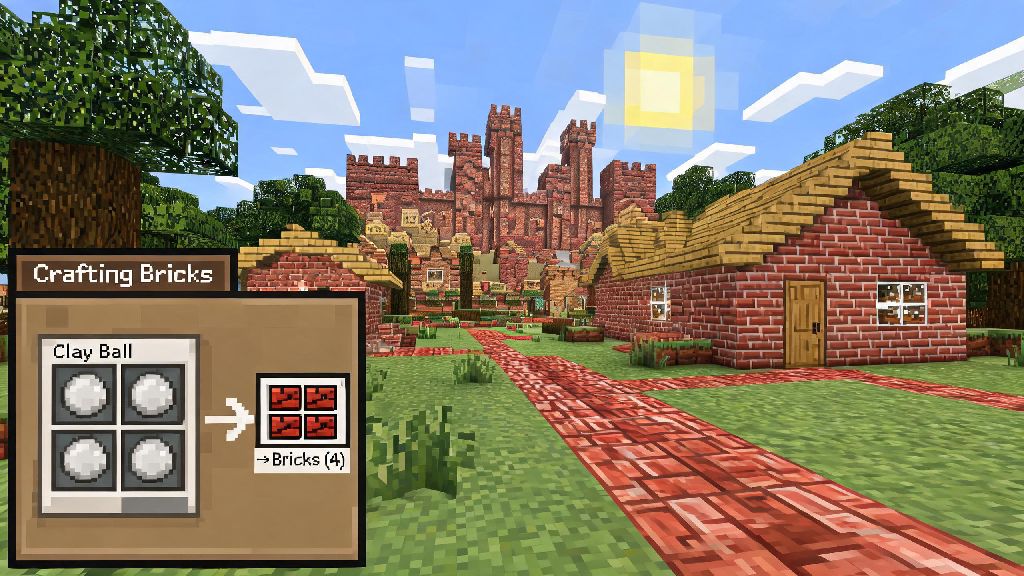
If you’ve ever tried to build a cozy cottage or a grand castle in Minecraft, you know plain cobblestone gets boring fast. Bricks are one of the most versatile, warm-looking building blocks you can use, and learning how to craft bricks in Minecraft is a basic skill that unlocks hundreds of design options. I’ve been playing Minecraft for over 10 years, and I still use bricks for 70% of my base builds, from path edging to full wall panels. If you’ve struggled to find enough clay or keep messing up the crafting recipe, this guide will walk you through every step, plus a few hacks most new players don’t know.
Step-by-Step: How to Craft Bricks in Minecraft From Raw Clay
The standard brick crafting process is simple once you know the steps, and it works the same across both Java and Bedrock editions of the game. First, you’ll need to collect clay, the raw material for all brick recipes. Clay spawns most abundantly in shallow river biomes, so if you’re spawning near a river, you can collect stacks of clay in 10 minutes or less. It also appears in swamp biomes, shallow ocean floors, and even underwater in lake beds. Clay blocks are light gray and soft, so they break in just a couple of hits with any shovel.
When you break a regular clay block (without silk touch), it drops 4 clay balls. You’ll need to smelt these clay balls in a furnace to turn them into individual brick items. Place one clay ball in the top slot of the furnace, and any fuel (wood planks, coal, dried kelp) in the bottom slot. Each clay ball takes 10 seconds to smelt, and produces one brick item.
Once you have 4 brick items, you can combine them to make a full brick block, the usable building material. You don’t need a crafting table to make brick blocks – the 2x2 grid in your personal inventory works just fine, which is a huge time saver when you’re out exploring. Arrange 4 bricks in a square in the grid, and you’ll get 1 brick block for your builds.
If you have a silk touch enchanted shovel, you can mine full clay blocks instead of clay balls. This saves you a ton of inventory space when you’re collecting large amounts of clay: one stack of 64 silk touch clay blocks will turn into 256 clay balls when you break them later, which would take 4 separate inventory slots if you mined them normally.
Alternative Ways to Get Bricks Without Crafting
You don’t always have to craft bricks from scratch if you’re short on fuel or don’t have easy access to clay. I often raid generated structures for bricks early in survival runs, because it cuts out the smelting step entirely. These are the most reliable places to find pre-made bricks or brick blocks:
That said, looting is never as consistent as crafting your own bricks, especially if you need hundreds of blocks for a large build. I only use looted bricks for small early-game projects, then set up a dedicated brick crafting station once my base is established.
Pro Tips to Speed Up Brick Production for Large Builds
If you’re planning a full brick castle or a neighborhood of brick cottages, crafting one stack at a time will take forever. I’ve tested dozens of production setups over the years, and these tricks cut my brick making time by 70% for big projects.
First, set up a renewable clay farm so you never have to go hunting for clay again. You can make a simple, low-effort clay farm using mud blocks and pointed dripstone. Mix dirt with water bottles to make mud blocks, then place them above a layer of pointed dripstone hanging over a hopper. Over time, the mud blocks will turn into clay blocks, which the hopper will collect into a connected chest. This gives you an infinite supply of clay without ever leaving your base.
Next, use multiple furnaces to smelt your clay balls in bulk. 6 to 8 furnaces running at the same time can smelt a full stack of clay balls in just a couple of minutes, instead of the 20+ minutes it would take with a single furnace. Use high-efficiency fuel like coal blocks or dried kelp blocks for bulk smelting, since each of these blocks can smelt 80 items, compared to just 8 items per piece of coal.
If you’re playing on Java edition, you can take this a step further with an auto-crafter setup. Connect hoppers to your furnaces to feed in clay balls and fuel automatically, then route the finished brick items into an auto-crafter set to make brick blocks. The crafter can feed the finished blocks into a storage chest, so you can go mining or build other parts of your base while your brick production runs in the background. Bedrock players can still use hoppers to collect smelted bricks into chests, which cuts out the tedious step of emptying each furnace manually.
Common Mistakes to Avoid When Crafting Bricks
Even seasoned players make silly mistakes when making bricks, and these errors can cost you hours of time or waste valuable resources. I’ve made all of these mistakes at least once, so you don’t have to.
The most common mistake new players make is trying to smelt full clay blocks directly in a furnace, instead of breaking them into clay balls first. A lot of people assume you can put a whole clay block in the furnace to get a brick block, but that mechanic doesn’t exist in the game. If you put a full clay block in a furnace, nothing will happen, so don’t waste your fuel on that.
Another mistake is wasting silk touch shovel durability on clay when you don’t need to transport large amounts. If you’re only collecting enough clay for a small 5x5 house, you don’t need to use your enchanted silk touch shovel – a regular iron shovel works fine, and you can save your silk touch durability for more valuable blocks like ice, amethyst, or ancient debris.
Many players also use low-burn-time fuel like saplings or sticks for smelting bricks. These fuels only smelt one item per piece, so you’ll need hundreds of saplings to smelt a full stack of clay balls. Stick to the high-efficiency fuels we mentioned earlier for bulk smelting, it’ll save you a ton of time gathering fuel.
Last, don’t forget to turn your individual brick items into full brick blocks before you head to your build site. I can’t tell you how many times I’ve run back to my base halfway through building, because I brought a stack of loose brick items instead of finished blocks. Get in the habit of crafting bricks into blocks as soon as they come out of the furnace, and you’ll avoid that frustration entirely.
Bricks are one of the most timeless building blocks in Minecraft, and once you know how to craft bricks in Minecraft reliably, you’ll never run out of options for your builds. Whether you’re building a tiny survival hut or a full medieval city, the warm red tone of bricks adds depth and character that plain stone or wood can’t match. Play around with the production hacks we covered, and don’t be afraid to mix bricks with other blocks like terracotta or stone bricks for unique design effects. Next time you’re planning a new build, give bricks a try – you might be surprised how much they elevate your design.