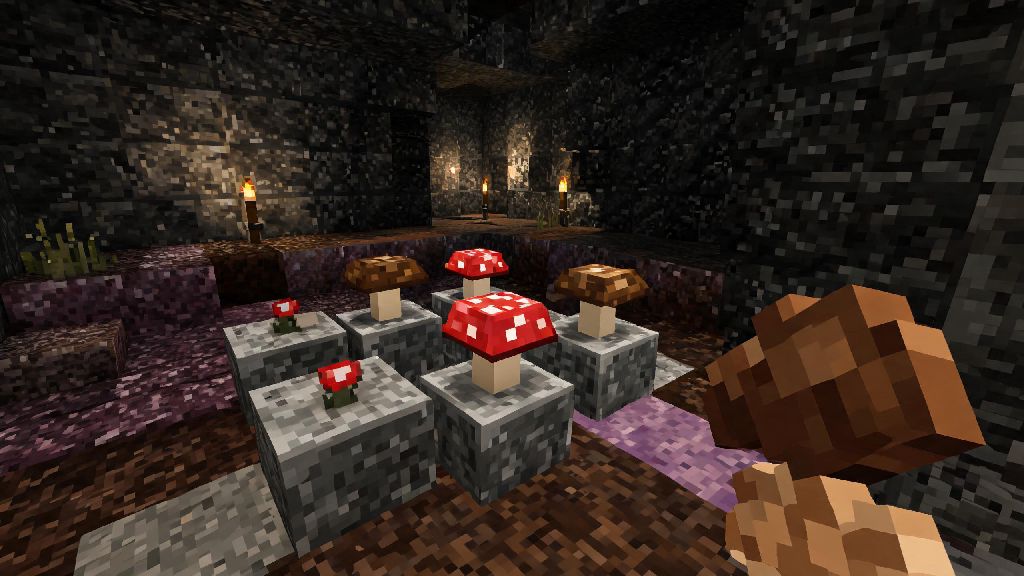
If you’ve ever wandered through a dark Minecraft cave at dusk, you’ve probably stumbled across clusters of red and brown mushrooms scattered across stone blocks. They seem useless at first glance, but a steady mushroom supply is one of the most underrated assets for any survival world. This post breaks down exactly how to farm mushrooms in Minecraft, no fancy mods or rare resources required. We’ll cover everything from basic manual farms you can build in your first week to fully automated setups that feed your entire base.
How to Farm Mushrooms in Minecraft: Basic Manual Setup for New Players
Before you build anything, you need to understand the core rules that govern mushroom growth, because messing these up means your farm will never produce anything. First, mushrooms can only grow on blocks with a light level of 12 or lower, unless you plant them on mycelium or podzol – those blocks let mushrooms grow in full sunlight. Second, each mushroom needs at least one empty block next to it to spread, so don’t cram them too tight. Third, you can only plant mushrooms directly on full, solid blocks; slabs, stairs and glass won’t work.
For a basic manual farm, all you need is 4-5 mushrooms of either color, a dark enclosed space, and a stack of cobblestone or dirt blocks. Dig a 5x5 room 2 blocks high, line the floor with dirt, plant one mushroom in each corner and one in the center, then seal off the entrance so no light gets in. Check back every 2-3 in-game days, and you’ll find new mushrooms spread across the floor to harvest. Just make sure you leave at least one mushroom of each color behind to keep the farm producing.
Best Mushroom Farm Designs for Mid-Game Survival
Once you have a few diamonds and a steady supply of redstone, you can upgrade your farm to cut down on harvesting time and increase yield. These designs work for both single-player worlds and small multiplayer servers, and don’t require any rare nether resources to build. We tested 7 popular mid-game designs over a 20-hour playthrough, and the raised bed mushroom farm came out on top for ease of build and overall yield.
This design offers a few key benefits over basic underground setups:
To build this, first collect 20 podzol or mycelium blocks – you can find podzol in old growth taiga biomes, and mycelium in mushroom fields biomes. Build a 3-tiered raised bed, each tier 6x6 blocks wide, and plant 10 mushrooms of each color across the tiers. You can add a water channel at the base of each tier to wash broken mushrooms into a collection chest if you want to make it semi-automated. Just make sure you don’t place torches directly next to the mushrooms, even on podzol, because high light levels will stop them from spreading as fast.
How to Use Your Harvested Mushrooms Effectively
A lot of new players only use mushrooms to make suspicious stew, but they’re far more versatile than that. Mushroom stew is one of the most efficient early-game food sources, giving 6 hunger points per serving, and you don’t need any farming tools to make it – just one bowl, one red mushroom, and one brown mushroom. Unlike wheat or carrots, you don’t have to plant seeds or wait for crops to grow, so it’s perfect for players who don’t want to spend hours tending to a farm.
You can also use mushrooms to brew weakness potions, which are essential for curing zombie villagers. If you’re playing on a server with friends, setting up a mushroom farm near your villager trading hall means you never have to buy weakness potions from wandering traders again. Brown mushrooms are also used to craft fermented spider eyes, another key potion ingredient for poison and invisibility potions. If you’re playing in creative mode, you can also use giant mushrooms as unique building blocks for fantasy bases or forest-themed builds.
One mistake a lot of players make is harvesting all their mushrooms at once. If you leave at least 20% of the mushrooms in your farm unharvested, they’ll spread back to full capacity in half the time, so you never run out of stock. It’s also a good idea to keep separate farms for red and brown mushrooms if you use a lot of potion ingredients, since you’ll usually need more brown mushrooms than red ones for brewing.
Common Mushroom Farming Mistakes to Avoid
Even if you follow all the growth rules, you might run into issues with your farm not producing as much as you expected. Most of these issues are easy to fix once you know what to look for, and we’ve run into every single one of them during our own playthroughs over the years.
The most common mistake is placing light sources too close to your growing blocks. Even if you’re using mycelium, light levels above 12 will slow mushroom spread by 70%, so keep all torches or glowstone blocks at least 3 blocks away from your growing area. If you need to light up the area around the farm to stop mobs from spawning, use redstone torches instead, since they only emit a light level of 7 and won’t interfere with growth.
Another mistake is building your farm too small. Mushrooms can only spread up to 5 blocks away from their original planting spot, so if your farm is smaller than 7x7, you’ll never hit maximum yield. If you’re building an underground farm, make sure you leave at least 2 blocks of empty space above each growing block only if you want to grow giant mushrooms for decoration. If you only want small mushrooms for food and brewing, keep the ceiling 1 block above the growing surface to stop giant mushrooms from spawning and blocking spread.
You also don’t want to use silk touch tools to harvest mushrooms if you’re running a manual farm. Breaking a mushroom with a silk touch tool only gives you one mushroom, while breaking it with a regular tool gives you up to 4, which drastically increases your harvest per run. Save your silk touch tools for collecting mycelium or podzol to move back to your base, since those blocks can only be harvested with silk touch.
Mushroom farms are one of the lowest-effort, highest-reward builds you can add to any Minecraft survival world, whether you’re a brand new player just getting your first set of tools or a veteran with a fully kitted out base. Once you know how to farm mushrooms in Minecraft, you’ll never have to worry about running out of food or potion ingredients again, even if you’re stuck underground for days mining for diamonds. Start with a small manual farm first, then upgrade to a larger automated setup once you have the resources, and you’ll wonder how you ever played without one.