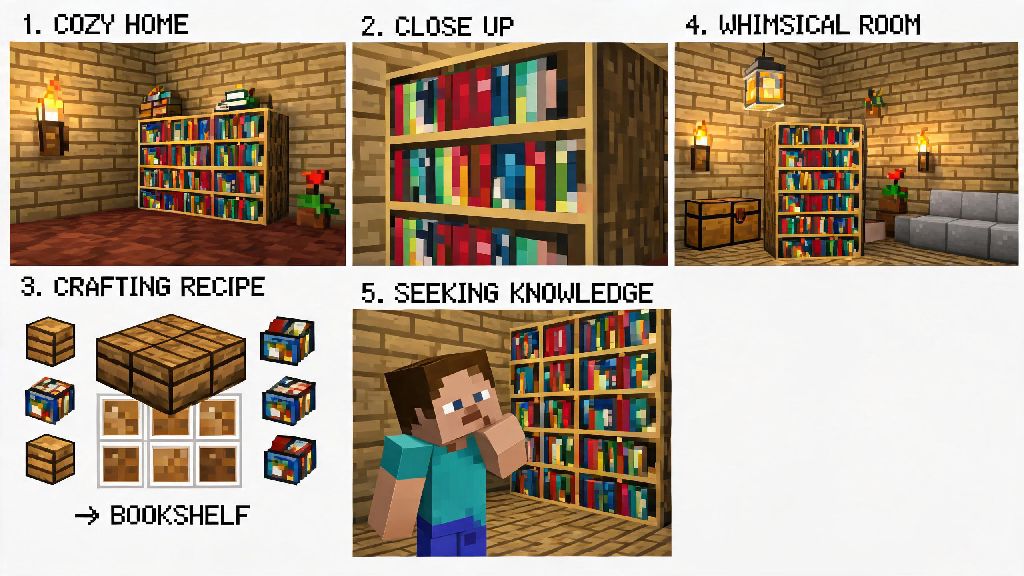
If you’ve ever wandered around a plain Minecraft base wondering what’s missing, or tried to get level 30 enchants only to hit a wall, bookshelves are the answer you’re looking for. They’re versatile, easy to make, and add so much personality to any build, no matter your play style. We’re breaking down exactly how to make a bookshelf in Minecraft, plus extra hacks to use them for way more than just wall decor.
How to Make a Bookshelf in Minecraft: Exact Crafting Steps
Crafting a bookshelf only takes two common materials, even if you’re playing on hardcore survival with no cheats enabled. You’ll need to gather:
Once you have your materials, head to a crafting table. Arrange the 6 wooden planks in the top and bottom rows of the 3x3 crafting grid, then place the 3 books in the middle row, one in each slot. Drag the finished bookshelf to your inventory, and you’re done. That means you don’t need any special tools or rare drops to make this block, even in your first few days of a new survival world. If you don’t want to craft them, you can also find bookshelves naturally generated in villages, stronghold libraries, and woodland mansions, but crafting is way faster for most players, especially if you already have a sugar cane farm set up for paper.
If you’re playing in creative mode, you can find bookshelves in the decorative blocks tab, and you don’t have to worry about gathering materials at all. You can also use different wood types to get different shade variations, even though the book part of the shelf looks the same no matter what planks you use. The wood frame color shifts to match the plank type, so you can match it to the rest of your base’s wood palette easily.
Key Uses for Bookshelves Beyond Decoration
Most new players think bookshelves are only good for making their bases look nicer, but they have a few super practical uses that make them worth crafting even if you don’t care about aesthetics. The most well-known use is powering enchanting tables. You need exactly 15 bookshelves placed around an enchanting table, with one block of space between the table and shelves, to unlock level 30 enchants — the highest tier of enchants you can get in the game, including unbreaking, efficiency, and protection IV. That’s a non-negotiable for any late-game survival base, since higher enchants make your tools, weapons, and armor last way longer and work better.
Bookshelves also work great for hidden storage if you’re playing on a server with other players, or just want to keep your valuables out of sight. You can use a bookshelf to cover a chest, secret door, or hidden bunker entrance, since most people won’t think to break a random decorative block to find your loot. They also blend perfectly with almost any build style, from medieval castles to modern city apartments, so you don’t have to ruin your base’s look to hide your stuff. You can even use them as a lightweight barrier block in creative mode to split rooms without putting up full walls that block light.
If you’re building a map for other players to play through, bookshelves make great trigger points for redstone mechanisms. You can set up a hidden lever behind a bookshelf that opens a door or activates a trap, which adds a fun puzzle element to adventure maps. A lot of popular escape room maps use this trick, since it’s intuitive for players to check bookshelves for secrets.
Creative Bookshelf Design Ideas for Any Base
Once you know how to craft the basic block, you can get really creative with how you use bookshelves to customize your build. If you’re making a medieval library, stack full rows of bookshelves from floor to ceiling, add oak wood beams between rows, and place lanterns on top of every third shelf for warm, cozy lighting. You can even add lecterns in front of some shelves to make it look like your villagers are stopping to read. Add a few carpeted seating nooks between shelf rows to make the space feel welcoming, not just functional.
For modern builds, mix dark oak bookshelves with white concrete blocks and black glass panels to make a sleek, minimalist built-in shelf unit. Add potted ferns or small flower pots on empty shelf spots to break up the dark wood and add pops of color that feel intentional, not messy. If you’re building a rustic cabin, use spruce bookshelves paired with cobblestone accents and candle holders for a cozy, lived-in look that fits perfectly with a snow or forest biome base. You can even hang small signs on the front of shelves to label what books or supplies are stored there, if you’re using them for organization.
If you want something more unique, you can build a bookshelf desk by placing a half slab on top of two bookshelves, then adding a crafting table and chair on one side. It’s a small detail, but it makes your base feel way more lived-in and realistic, instead of just a collection of random functional blocks. You can also use bookshelves to frame windows or doorways for a warm, welcoming entryway that stands out from plain wood frames. For server spawn builds, line the walls of a welcome center with bookshelves, and place signs in front pointing to different areas of the server to help new players find their way.
Common Bookshelf Mistakes to Avoid
Even though bookshelves are really simple to use, there are a few common mistakes that new players make all the time that waste resources or break their functionality. The biggest one is placing blocks between your enchanting table and bookshelves when you’re setting up your enchantment station. Even a single torch, carpet, or flower pot between the table and shelf will block the enchantment power, so you’ll end up with lower level enchants than you expect. Always leave that one block gap completely empty if you’re using shelves for enchanting. If you’re not sure if the gap is clear, right click the enchanting table to check the maximum enchant level it offers, and adjust your shelves accordingly.
Another mistake is using the wrong wood type for your build’s aesthetic. A lot of players just use oak planks for every bookshelf, since oak is the most common wood, but switching to warped or crimson planks for a nether-themed base, or dark oak for a gothic build, makes a huge difference in how polished your final build looks. You don’t have to stick to vanilla oak shelves just because that’s what you crafted first — take a minute to collect the right wood type for your build, it’s worth the extra trip. You can also mix and match wood types for a more eclectic, lived-in look if that fits your base’s vibe.
Finally, don’t break bookshelves with your fist if you want to keep the materials. If you break a bookshelf without a silk touch tool, you’ll only get 2-3 books back, and lose all the wooden planks. If you’re rearranging your base or moving your enchantment station, make sure you use a silk touch pickaxe or axe to pick up the full bookshelf, so you don’t waste all the leather and paper you used to craft it. So if you don’t have silk touch yet, it’s better to leave your bookshelves in place until you get the enchant, instead of breaking them and wasting resources. That’s a small tip, but it saves you hours of farming sugar cane and leather for new books later on.
Bookshelves are one of the most versatile blocks in Minecraft, and they’re accessible for every player no matter how long you’ve been playing. Whether you’re setting up your first enchantment station, decorating a new base, or hiding a secret loot room, they work for almost every use case. Now that you know how to make a bookshelf in Minecraft, you can start experimenting with different designs and uses to make your world feel more personal and functional.