If you’ve ever stood staring at a stack of obsidian you spent 10 minutes mining, or stumbled on a ruined Nether portal frame far from your base, you know exactly how critical a working fire starter is for progression. Learning how to make flint and steel in Minecraft is one of the first mid-game crafting milestones every survival player should hit before they start exploring outside their immediate base area. It’s cheap, lasts for dozens of uses, and unlocks some of the game’s most exciting content, from Nether travel to clearing out overgrown cave systems quickly. I’ve spent hundreds of hours playing vanilla survival across Java and Bedrock editions, and I still keep a spare flint and steel in my hotbar at all times, even when I have more advanced fire sources like fire charges available.
Materials You Need to Craft Flint and Steel in Minecraft
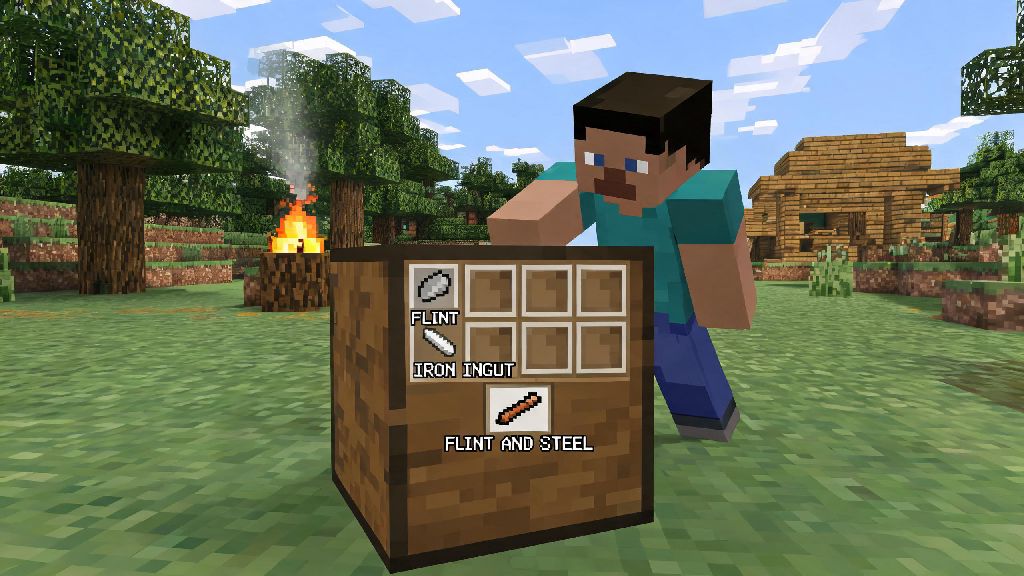
The recipe for flint and steel is intentionally simple, so you can make it even early on in your survival playthrough with basic materials. You only need two items total, no rare drops or enchanted resources required. First, you’ll need 1 iron ingot, which you can get by smelting raw iron ore in a furnace with any common fuel like coal, wood, or dried kelp blocks. Iron ore spawns most commonly between Y levels 16 and 64, so you won’t have to dig deep to find enough for a few ingots. If you get lucky exploring, you can also find iron ingots in village, dungeon, or ruined portal chests, so you might not even have to mine and smelt your own.
The second material is 1 flint, which drops from gravel blocks when you break them. There’s a base 10% chance to get flint every time you break a gravel block, no matter what tool you use, but enchanted tools will speed up farming significantly. You don’t need a 3x3 crafting table to make flint and steel — the recipe fits in the 2x2 personal crafting grid in your inventory, so you can make it even when you’re out exploring far from your base. Fortune III enchanted shovels have a 30% chance to drop flint from every gravel block you break, so if you have one, use it to farm flint far faster than with a regular tool. You can find gravel most often along river banks, in cave systems, on mountain slopes, and even in small patches in the Nether if you’re already exploring that dimension.
Step-by-Step Crafting Process for Flint and Steel
Unlike many Minecraft recipes that require specific placement of materials in the crafting grid, flint and steel is a shapeless recipe, so you don’t have to arrange the items in a specific pattern to get the finished tool. That makes it even easier to craft when you’re in a hurry, like when a creeper is sneaking up on you while you’re trying to light a Nether portal to escape. The process is identical for both Java and Bedrock editions of vanilla Minecraft, though some modded servers may change the recipe to require extra materials.
If the recipe doesn’t pop up in the output slot, double-check that you’re not using an iron nugget instead of a full iron ingot, or that you don’t have extra items filling other slots in the grid. I’ve made that mistake more than once when I’m rushing to light a portal before night falls and mobs start spawning around me. One flint and steel has 64 total uses in vanilla Minecraft, so it will last you for weeks of regular use if you don’t waste it lighting random fires around your base for fun. If you’re playing on a server with grief protection, you also won’t be able to light fires in other players’ claimed areas, so don’t waste durability clicking on blocks you don’t have permission to edit.
Top Practical Uses for Flint and Steel in Survival Worlds
Most new players only use flint and steel to light Nether portals, but it has dozens of other useful applications for both survival and building. The most obvious use is activating Nether portals, which are your only way to travel to the Nether to collect blaze rods, netherite, quartz, and other rare materials needed for late-game progression. You can also use it to light campfires for cooking food, melting snow, and providing warm light that won’t melt ice blocks if you’re building in a snowy biome. Campfires also repel bees, so placing a lit campfire under a bee hive makes collecting honey far safer without angering the bees inside.
Another great use is clearing grass, leaf, and vine blocks quickly to make space for building or farming. Instead of breaking each leaf block individually with an axe or shears, you can light them on fire and let the flames burn through the excess foliage in seconds, as long as you have a water bucket on hand to put out the fire once you’re done. You can also use flint and steel to activate TNT for large mining projects or demolition work, and to light permanent fire sources on netherrack to mark paths in the Nether or keep mobs away from your base entrance. Flint and steel is the only renewable, low-cost way to activate Nether portals without relying on rare fire charges you find in chests or craft with gunpowder and blaze powder.
If you’re a builder, you can also use flint and steel to light candles, jack o’lanterns, and lanterns after you place them, so you don’t have to carry stacks of pre-lit decorative items when you’re working on a big build. I once spent 20 minutes trekking back to my base because I forgot my flint and steel when I went exploring a ruined portal 1000 blocks away, so I now keep a spare one in every storage chest I place outside my main base, just in case. You can repair a damaged flint and steel by combining two damaged ones in your crafting grid, no extra materials needed, which saves you from wasting iron and flint on new tools when your old one is almost out of uses.
Common Mistakes to Avoid With Flint and Steel
As useful as flint and steel is, it can also cause massive problems if you use it carelessly, and there are a few common mistakes most new players make their first few times using the tool. The first and most costly mistake is wasting durability on unnecessary fires. Every time you successfully light a block with flint and steel, you use one of its 64 charges, so spamming it to light random fires around your base will run through the tool’s durability far faster than you expect. Save the uses for when you actually need them, and use other light sources like torches for general base lighting.
The second big mistake is using flint and steel near flammable builds. Fire spreads up to 7 blocks away from the source in vanilla Minecraft, and can burn down an entire oak wood base in less than a minute if you’re not paying attention. I learned that the hard way when I accidentally lit a tree next to my first survival base, and lost all my diamond tools and 10 hours of building progress in the fire. Never use flint and steel to light a fire near dry grass, wood, or wool blocks unless you have a water bucket on hand to put out stray flames immediately. If you do accidentally start a fire you can’t put out, try to break the flammable blocks around the fire as fast as possible to stop it from spreading further.
Another common mistake is forgetting to carry a spare flint and steel or extra crafting materials on long exploration trips. If you use your last charge lighting a Nether portal to go home, you’ll be stuck in the Nether unless you can find flint and iron in Nether chests, or can trade with piglins for the materials you need. You should also never use flint and steel to light TNT when you’re standing within 3 blocks of it, since the fuse only lasts 4 seconds and the explosion will deal serious damage, even if you’re wearing full iron armor. Always back up immediately after lighting TNT, or use a redstone circuit to activate it from a safe distance to avoid unnecessary deaths.
At the end of the day, knowing how to make flint and steel in Minecraft is a basic but essential skill that unlocks almost all of the game’s late-game content, while also making day-to-day survival tasks far easier. You don’t need rare materials or high-level enchants to make it, and it’s useful from your first week of survival all the way through to end-game boss fights and large-scale base building. Take the time to farm a little extra flint and iron to keep spares around your base and in your travel bags, and you’ll never get stuck stranded without a fire source when you need it most.